
A Comparison of Two NASAs
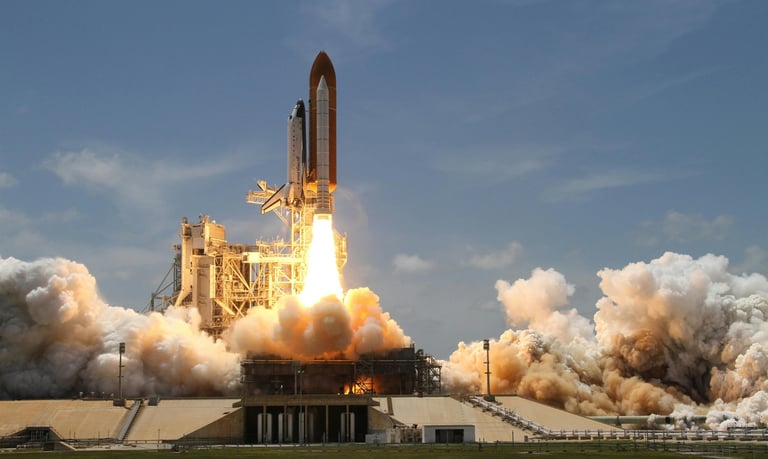
As I write this, it is almost midnight in Kenya. It is also almost 3.00 pm in Florida, USA where the American Kennedy Space Center has just successfully launched the Spacex rocket into space.
They say it is the heaviest payload that NASA has ever launched. I have no idea what kind of payload they are putting into space but the launch was spectacularly successful even to a naive TV watcher in the capital city of Kenya.
Thousands of American fans had travelled to Cape Canaveral to watch the historic event and, well before the day started, tickets to the event had already been sold out in the relatively warm Florida weather. They cheered as the countdown ticked towards lift-off. A truly remarkable event.
I say warm because just two nights ago I watched another equally spectacular but more earthy event in good old USA that was anything but warm. This was the finals of the American NFL competition that pitted the two finalists for the popular American equivalent of British soccer. The event was held in a heated superdome in Minneapolis, Minnesota, where the temperature was hovering at around 19 degrees below zero. Not a temperature to be out in even with the best winter clothing in the world. This event was also a sellout both in terms of the number of fans who attended as well as the world-wide TV viewing of this peculiarly American football game.
Both events demonstrated American superiority in both science and sports two activities that somehow define modern living.
And it got me thinking about our relatively sorrier state as we confront our two similar events: The launch of our own political party NASA on Black Tuesday, 30th January 2018 and our feeble efforts at resolving a minor national calamity called drought.
Our NASA launch into new political territory was a spectacular failure and a national shame all things told. If we cannot even get four leaders to be present during the launch of their space equivalent in political pursuits, I cannot help but wonder what lies ahead for this country.
As for the second "event", that is our feeble attempts to come up with suitable drought mitigation strategies even with 21st Century science and technology accessible to us, one wonders how, if ever, we shall catch up with our northern neighbors. I am aware that drought is part of the global warming phenomenon but, even with it, is clear that we have not done enough to prepare for this recurring human tragedy. Surely, we can do better.
Back to NASA
Returning to our NASA, one can be forgiven for wondering if it was sheer naivety of our politicians in as far as strategy is concerned or a serious miscalculation of the strength of the other side that they are opposing. They can do better, or can they? I wonder.
As for the American NASA, this time around there was a curious presence. This was by way of an electric car invented by one Elon Musk, chairman of Tesla. Tesla is a bold new attempt to redefine modern transportation in the world from petroleum driven to electric power driven. It is not clear what that car was doing prominently displayed at the dashboard of the NASA rocket.
I will keep an eye on that space. And our own NASA. Food for thought as we head deeper into 2018.
JH Kimura
Nairobi,
6th February 2018.
In retrospect, I think I was expecting too much from both NASA projects. The US NASA mission, intended to be a dealmaker for Tesla, has faded from the memory of most Americans partly due to the rise and rise of a political dinosaur called Donald Trump.
He is on a mission to keep his fellow Americans permanently glued to their TVs seeking to watch his latest political antic. And, I admit, he seems to be succeeding.
As for the Kenyan NASA, it sadly disappeared from the screens almost as fast as it appeared showing just temporary our political shenanigans are. Maybe that is the way it was meant to be.