
A Flowery New Vision
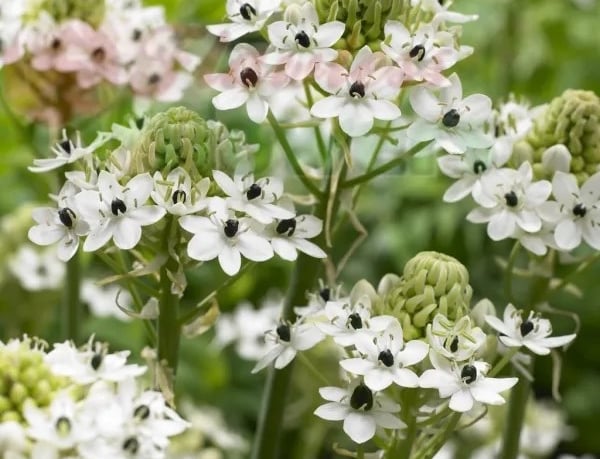
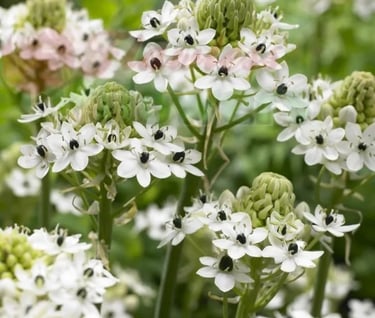
Since September 2015 just before the 12th Ndakaini Half Marathon, I got interested in a new idea. This involved planting a new variety of flowers called Arabicums.
To be honest, the idea was planted into my head by a former "classmate"(a euphemism I use for my students at the University of Nairobi where I used to teach) and, as he was sounding bullish about it, I decided to give it a try.
Now, I had no idea what arabicums were but all I gleaned from him was that they were easy to grow in my part of central Kenya and had a ready market in Amsterdam, that notorious capital of the flower industry in Europe and, by extension, the entire snow-clad world north of the Tropic of Capricorn. Why these snow-sodden countries would want flowers I have never been able to tell but, on reflection, if you have ever lived out there at 32 degrees below zero, as I did in the winter of 1971 in a place called Edmonton, Alberta, you can appreciate why the welcoming visual embrace of tropical flowers as you get home in the dark at 5 pm, would make you feel good all over. But that is a story for another day..
Back to Arabicums in Ndakaini. As one not to be swayed by popular opinion, I did a bit of "research" on this momentous subject. Through it, I discovered that, in fact, there was a group of farmers from my locality who had been growing these flowers for years and had in fact been making a bit of money from them. I even visited a farmer in a place called Muthandi near my home who was financing the construction of his stone house from the flowers and my first reaction was: why were these bloody fellas keeping the information to themselves when they could share it among their tea farming neighbours and thereby make every one rich? But a little voice at the back of my mind reminded me of an old Kikuyu adage: If everyone around you is rich where will you find people to work for you?
On enquiry, I learnt that these flowers were grown like onions, the type that produced bulbs which could last much longer than the "machachi" type typical of much of Kenya. Who brought onions into Kenya in the first place?, I wondered, but no matter. All I had to do was prepare my land, manure it and then place (not plant) the bulbs and they would do the rest on their own if they had enough water.
So I headed to Limuru where, I was reliably informed, these bulbs could be found in sufficient quantities. Sure enough, I saw several farms and that is when I came face to face with the flowers that would lead me to my own
yellow brick road. Their simplicity was simply staggering. A bulb, placed on a flower bed, growing, sprouting stalks, a flower formation at the tip, more water then, Bingo! Ready for the market.
"How long?", I asked.
"Three months", I was told. "Planting to market". "Wow!" I can't believe this is happening to me.
Twende Kazi.
That is how, with the zeal of a Canadian beaver, I got to work. Cleared an acre and a half of my land land by the day dam, prepared seed beds, bought manure from Kajiado, procured 90 bags of seedlings from Ngarariga near Limuru, hired a planting expert and Bingo! On 2nd November 2015, we started placing the bulbs and by 11th November all the 90,000 bulbs had been placed.
Of course a few other things were happening around to ensure project secrecy - you do not want every Kamau, Mucemi or Muigua asking: "What is going on here?" In case you do not know, the people of my village are the most curious people in the world but not always for the right reasons.
By the grace of God, I did not have to worry about water that accursed God- given commodity. El Nino did it for me as predicted by our good weatherman. It rained and rained and rained. And the bulbs grew and grew and grew. So much so that, by Christmas, the first flowers began to appear.
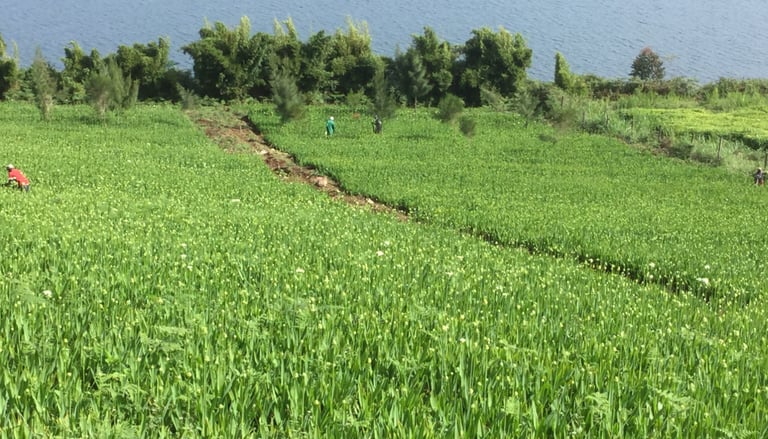
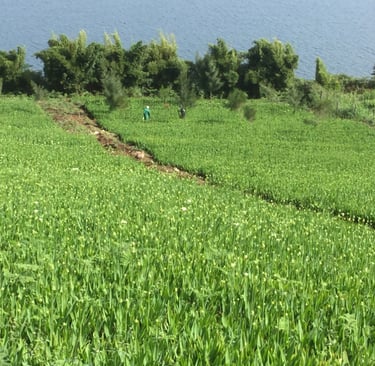
The gods must be smiling at me, I found myself thinking. As well as my daughter whom I had conscripted as a partner - you know the thing they teach you in business school about risk sharing. But she had not yet made a visit to the project believing, I suspect, in her notoriously ubiquitous dad. Another story.
Into January and a whole new set of questions. The main one being something I learnt in the school of hard knocks: The route to market. In short, the gods and I had done our bit, yes. But how were we going to get the
flowers to Amsterdam so they could hit the lovelorn Valentine crowds by the first week of February? This was incidentally our target date so we were dead on target. And El Nino was still behaving itself although I had taken the extra precaution of connecting the farm to our local water system and had made a provision for a 10,000 litre water tank just in case. For those of you who may not appreciate the magnitude of my predicament, at the bottom of my farm is a 70 million cubic metre fresh water dam that supplies 80% of the water that is consumed in Nairobi but us locals can't touch that sacred commodity. But that is a story for yet another day...
Another thing, as a "professional" flower baron, I could not allow my special flowers to be picked and stored anyhowly, so I had to build a collection centre which I did in a record of three weeks. This mostly to impress the buyers
about the seriousness of this enterprise which they impressed upon me when they came on their inspection of the farm.
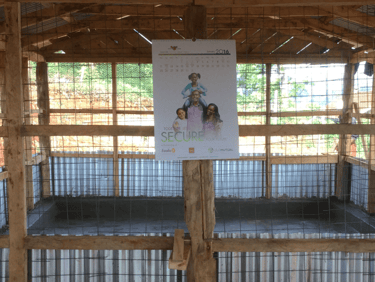
In short, in my semi-academic mind, I had done all I thought was necessary for a successful venture into the fresh cut-flower business.
And so, it was with a great deal of trepidation, excitement and premonition that, on 21st January 2016, I headed out to Ndakaini to prepare for the first sale. Surely, I had done everything right so nothing could go wrong.
Or so I thought.
Wizard of OZ
Now that you have heard this, let me take you down another road called ”The Wizard of Oz”. In case you have never watched it in its animated form, it is the story of a lady and her dog who are torn from their home in Kansas and sent into a strange orbit to a place called Oz, a magical place where everything was covered in gold. To get there, they followed a “yellow brick road”. You can google the whole story if you do not know it.
As you can guess, there are some things you do in this life believing that you covered every possible angle until you discover to your horror that a lot of that is what is sometimes called “wishful thinking”. There is an English idiom that says: If wishes were horses, every fool would ride.
To cut a long story short, that is exactly what happened to me. Two calamities struck in quick succession. One, the owner of the company that was collecting the flowers and sending them to Europe died suddenly throwing the whole business into a spin it would never recover from. Two, the market for arabicums plummeted from as high as Sh. 18 per stem to Sh. 3 per stem presumably, I was told, due to oversupply. Yes, simple economics, but where were the government officials who were supposed to be tracking these prices?
So, nothing is as easy as it looks and as some clever wit said: If something is too good, think twice. I should have known it but, in business, you can never avoid all risk. As a finance academic, I know that for a fact.
Big question still remains: What do you do in such circumstances?