
ITUIKA: Handing Over the Intergenerational Baton
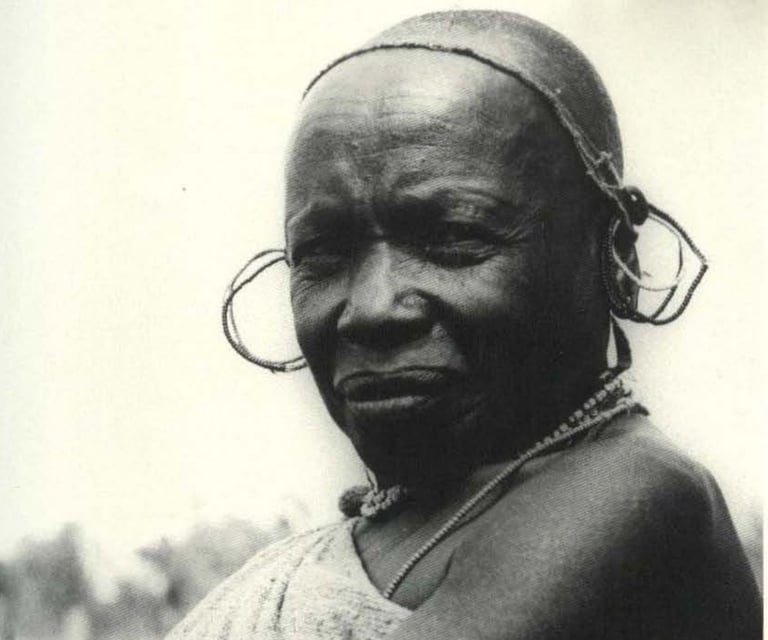
There used to be a very organised system within the Gikuyu governmental culture that provided detailed guidelines on how power to govern the people would seamlessly pass from one circumcision age group to the next.
The understanding was that once a ruling generation reached a certain age, it was expected that it would relinquish the power and allow their younger successors to take over. The process was known as “Ituika”, literally meaning “the cutting of the knot”. It was a very elaborate process and the rules were quite clear but were known only by a small group of elders then known as “kiama kia matathi”, the council of the wise elders.
The procedure was so secret that it could not even be told to non-insiders. And that is why you will find that an “external insider” like LSB Leakey could not be entrusted with the secret. In case you are interested, you will find that in his 3-volume set of books titled “The History of the Southern Kikuyus Before 1903”, he was given every bit of information about the Gikuyu culture but when it came to “Ituika”, he was told in no uncertain terms that this was a no-go zone even for a trusted member of his adopted tribe.
Unfortunately, as in many Gikuyu cultural traditions, there were those who believed that there was always an exception to the rule. In the case of the Ituika protocol, the silent counter-belief was that while the Ituika thing had to happen at one point in time, power was never handed over on a platter so to speak. It had to be earned or taken by force - “Ituika ritinengeneranagwo ni gutunyanwo ritunyanagwo.” In other words, the recipients had to demonstrate that they were, in fact, ready to assume control.
The Current Context
Since 1988, I have been fighting an almost lone battle on behalf of the people of Ndakaini. That was the year the Government of Kenya decided to compulsorily acquire the land in the area for building a mega-dam to supply water to the City of Nairobi.
Although the circumstances surrounding the dam project have been in the public domain for a long time(since 1986 in fact), the details are not well known. For instance, the original plan was to acquire a massive area starting from the Ndakaini market and to stretch all the way to the Aberdares forest more than 7 km upstream an area of more than 4,000 acres.
The local residents were never told the truth and even my father, who was the sub-chief of the area, could not believe that such a huge undertaking could be undertaken without his knowledge. Until the day I showed him a copy of the survey map that I had acquired from the project consultant in confidence. When the details were revealed to the local populace, there was near pandemonium. On my part, I had to be extra cautious as I was dealing with two other highly sensitive issues: moving my university’s faculty of commerce to the KIA campus 10 km away and avoiding arrest for being a director of a “failed” local bank.
To cut a long story short, we somehow managed to scale down the project by nearly 40% and increase the compensation for land amount from Sh 30,000 per acre to nearly Sh 60,000. But the casualties among the locals were huge and have never been fully documented. These included suicides, murders, relocations to the Rift Valley, building new homes and, subsequently, lots of deaths due to HIV infections brought in by the migrant populations of workers to the dam site. “Collateral damage”, as Americans call it.
Handing Over the Baton
Personally, there were two major challenges. The first one was mobilizing the local community and asking them to join a new organisation I had registered - NDEKA, an acronym for Ndakaini Dam Environmental Conservation Association. They had to pay a joining fee of Sh 200 each. By the time we were done, we had more than 1,200 members.
This was in 2003 after the change of regime in Kenya and the association was launched in a colourful ceremony presided over by the new Minister for Water, Hon. Martha Karua, in April 2004. I could not attend the function as I was in hospital after a terrible road accident.
The second challenge was how to get money to run the Association - most people assumed that this was the responsibility of the government but there were many complications along the way but somehow we managed. This turned out to be much easier than expected as most of the people I approached - individuals and corporates - could understand our predicament. They donated money and tree seedlings willingly and participated in tree planting exercises all around the dam. There is now a thick tree buffer all around the 42 km shoreline.
In the process, we discovered that the road around the dam could be an added attraction: Ndakaini Half-Marathon. It is now in its 16th year and has attracted many star long distance runners like Sammy Wanjiru and Abel Kirui.
One might think that handing over the project to the next generation should be a piece of cake. But that is where the challenge lies: Getting willing and able younger people. Maybe, they are not ready to receive this Ituika and I can’t help wondering why.
As for me, I believe I have done my part. Time to move on.
JH Kimura,
20th February 2020
When I finished writing the last part of this piece, the coronavirus pandemic had just started hitting Europe after originating in a remote city in China called Wuhan. It is not the kind of city you could have known about unless you are a genuine Chinophiliac.
As I write this, it is nearly two months since that date but the devastation caused to the world is worse than if a world war had broken out. By that date, most of the damage was on that part of China where the government had introduced extreme measures in order to contain the spread of the virus. Little did they know that it was the proverbial case of closing the gate after the horses have bolted.
As of 18th April 2020, more than 2.2 million cases had been confirmed in the world, over 150,000 people have already died and the virus has reached practically every country in the world. In Kenya, we have had more than 240 infections but, mercifully, only 11 people have died. The US, in contrast, after initial denial has more than 700,000 cases and over 37,000 deaths the highest of any country in the world.
Which brings me back to the question of our “Ituika” concept. It looks like the modern world is in some sort of mass denial and more so the advanced nations of Europe. It is almost like they cannot believe it inspite of their more advanced technologies and health systems.
The main question is: How and why did they get caught flat-footed and, more importantly, what are they doing about it? Intergenerational issues aside, Europe and America have demonstrated a strange case of unpreparedness in the face of a tragic calamity.
Questions must be asked about the validity of their leadership of the world.
Is it time for change of guard?